Learn how continuous improvements, performance optimization, maintenance, and new features help digital products remain secure, useful, reliable, and ready to evolve.
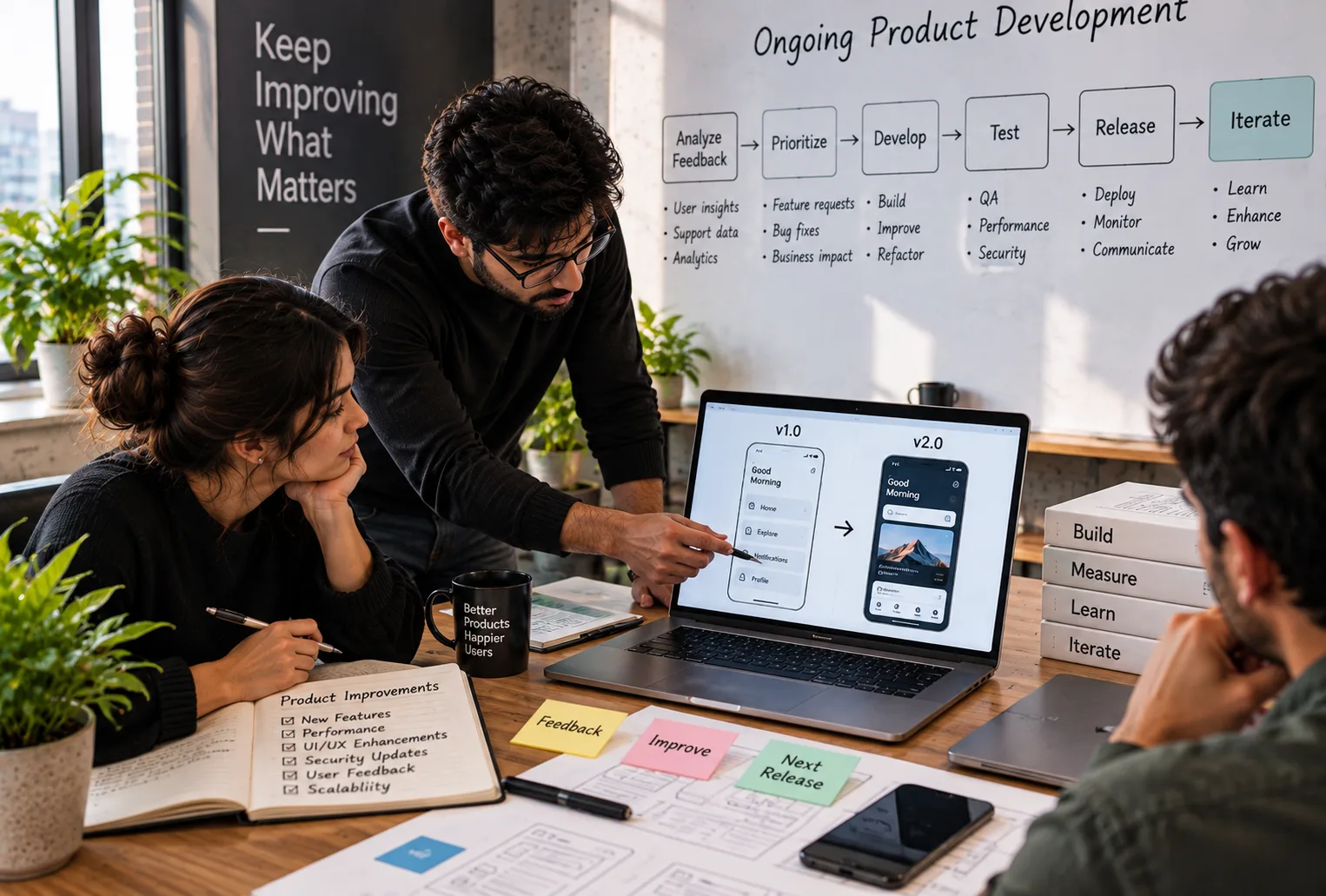
Table of Content
Overview Introduction Why Launch Is Only the Beginning Monitor Product Performance Use Data and User Feedback Improve the User Experience Maintain Security and Reliability Add New Features Strategically Optimize Product Performance Keep the Technology Up to Date Build a Continuous Product Development Process Common Ongoing Development Mistakes to Avoid Conclusion Frequently Asked QuestionsOverview
Launching a digital product is an important milestone, but it is not the end of the product development process. Once a website, application, SaaS platform, or custom software solution reaches real users, new information begins to emerge.
Users interact with products differently than teams expect. Technology changes, performance requirements evolve, security risks develop, and business goals shift. A product that remains unchanged can gradually become less useful, less efficient, or harder to maintain.
Ongoing product development provides a structured way to respond to these changes. Through continuous improvements, maintenance, performance optimization, user research, new functionality, and technical updates, digital products can remain useful and ready to evolve.
Introduction
The first version of a digital product is built using the information available at that point in time. After launch, the product gains something development teams cannot fully replicate before release: real-world usage.
Analytics can show how users behave. Feedback can reveal frustrations. Support requests can identify recurring problems. Performance monitoring can uncover technical bottlenecks. Business changes can introduce new requirements.
All of this information creates opportunities for improvement. Ongoing development turns those opportunities into a continuous process of making the product more useful, reliable, secure, and aligned with user and business needs.
Why Launch Is Only the Beginning
A product launch establishes the foundation, but digital products operate in changing environments. Users' expectations change, competitors introduce new experiences, platforms evolve, and businesses discover new opportunities.
Even a well-designed product may require changes once it reaches real users. Some features may become more important than expected, while others may receive little use. Certain workflows may create friction that was not obvious during testing.
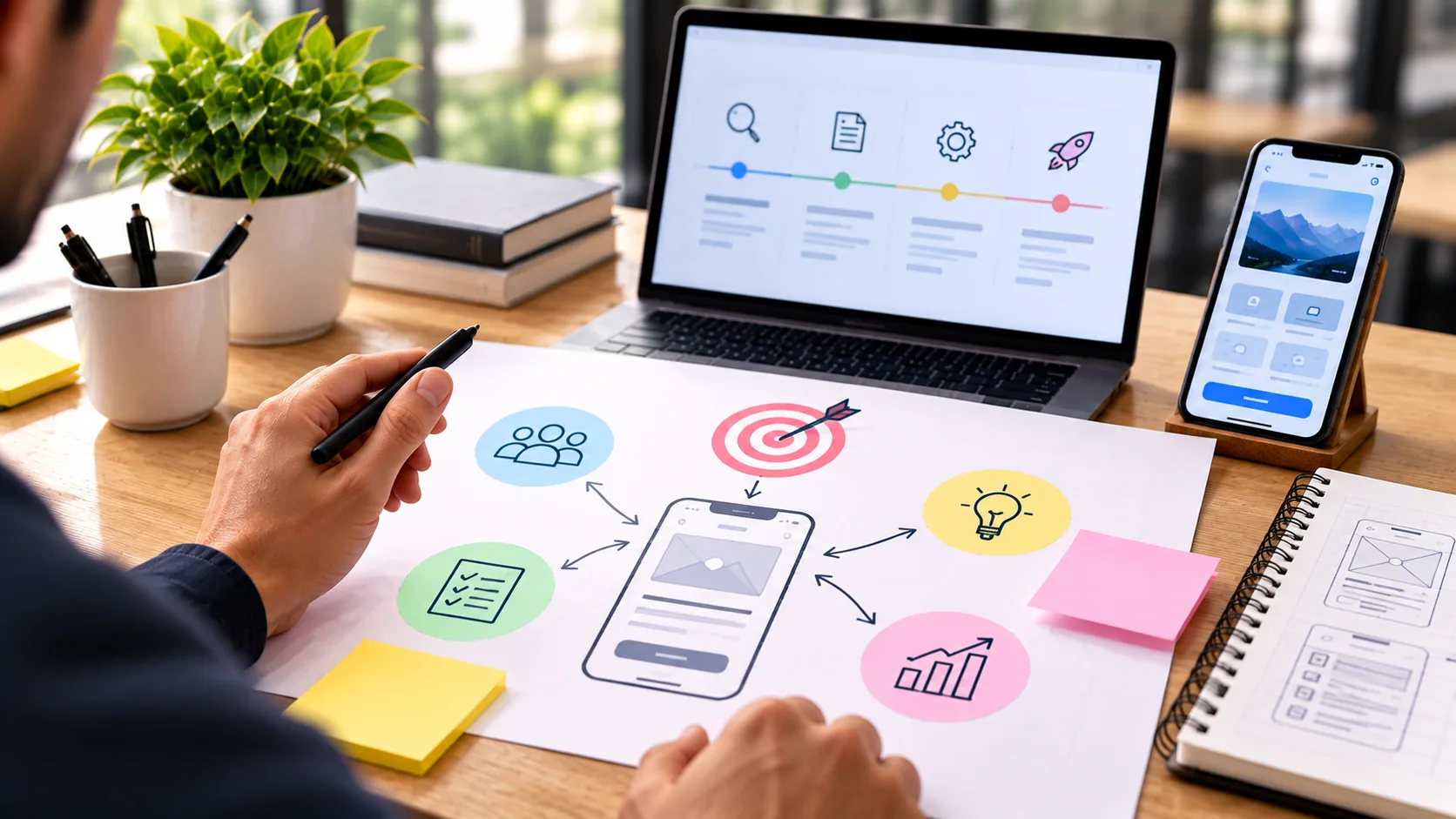
Continuous development allows teams to respond to this information instead of treating the initial product version as permanent.
- Real user behavior: Understand how people actually use the product after launch.
- Changing expectations: Adapt the experience as user needs evolve.
- Business growth: Introduce functionality that supports new business requirements.
- Technical evolution: Keep the underlying technology reliable and maintainable.
- Market changes: Respond to changing competitive and industry conditions.
Monitor Product Performance
Performance is not something that should only be measured before launch. As traffic, data, functionality, and integrations increase, the technical behavior of a product can change.
Monitoring helps teams identify slow pages, failed requests, high resource usage, unexpected errors, and other issues that can affect the user experience.
Regular performance reviews can also reveal areas where technical improvements can make the product faster and more efficient.
- Track response times: Identify slow interactions and application requests.
- Monitor errors: Detect recurring technical issues before they become larger problems.
- Review resource usage: Understand how infrastructure is being used as the product grows.
- Measure frontend performance: Identify opportunities to improve loading and interaction experiences.
- Monitor availability: Track reliability and identify unexpected service interruptions.
Use Data and User Feedback
Product decisions become more useful when they are informed by both quantitative data and qualitative feedback.
Analytics can show what users are doing, but feedback can help explain why they are doing it. Combining both sources creates a more complete understanding of the product experience.
For example, analytics might reveal that users frequently abandon a particular workflow. User interviews or support conversations can then help identify whether the problem is confusing content, unnecessary steps, missing information, or another usability issue.
- Analyze user behavior: Identify important patterns in product usage.
- Collect direct feedback: Give users ways to share problems and suggestions.
- Review support requests: Identify recurring issues and areas of confusion.
- Test improvements: Validate changes before making them permanent.
- Prioritize evidence: Use data and feedback to guide development decisions.
Improve the User Experience
User experience is not finished when the initial interface is launched. As users interact with a product, teams often discover opportunities to simplify navigation, improve workflows, clarify content, and reduce friction.
Ongoing UX improvements can focus on small changes as well as larger product experiences. Simplifying a form, improving navigation, refining onboarding, or making an important action easier to find can have a meaningful effect on how users interact with the product.

Design systems can also evolve as the product grows. New components and patterns should remain consistent with the overall experience while supporting new functionality.
- Improve onboarding: Help new users understand the product and reach value more easily.
- Reduce friction: Simplify workflows that contain unnecessary steps.
- Improve navigation: Make important features easier to discover and access.
- Refine interfaces: Improve clarity, hierarchy, and interaction patterns.
- Maintain consistency: Keep new functionality aligned with the existing design system.
Maintain Security and Reliability
Security maintenance is an ongoing responsibility. Frameworks, libraries, dependencies, infrastructure, and external services can receive updates or develop new vulnerabilities over time.
Regular maintenance helps teams keep the technology foundation current and reduce avoidable risks. This can include dependency updates, security patches, access-control reviews, backups, monitoring, and infrastructure improvements.
Reliability also depends on understanding how the product behaves when something goes wrong. Error handling, logging, monitoring, recovery processes, and regular testing can help teams respond more effectively to unexpected problems.
- Update dependencies: Keep frameworks and third-party packages maintained.
- Apply security updates: Address relevant vulnerabilities and security issues.
- Review access controls: Ensure users have appropriate permissions.
- Maintain backups: Protect important product and business data.
- Monitor system health: Identify reliability problems before they significantly affect users.
Add New Features Strategically
Ongoing development does not mean continuously adding features. Every new feature introduces design, development, testing, maintenance, and support requirements.
New functionality should therefore be connected to a clear user or business need. Product data, customer feedback, business objectives, and market opportunities can help teams determine which improvements are worth prioritizing.
A focused roadmap can help prevent feature overload while keeping development aligned with the product's direction.
- Start with a clear need: Understand the problem the new feature is intended to solve.
- Validate the opportunity: Use research and product data before committing significant resources.
- Prioritize value: Focus on improvements that provide meaningful benefits to users or the business.
- Consider complexity: Evaluate the long-term maintenance impact of new functionality.
- Measure results: Review how new features perform after release.
Optimize Product Performance
As digital products evolve, performance bottlenecks can appear in places that were previously efficient. New features, larger datasets, additional integrations, and increased traffic can all affect application performance.
Performance optimization should therefore be an ongoing process. Teams can review application code, database queries, APIs, assets, infrastructure, caching, and frontend behavior to identify opportunities for improvement.
Optimization should be guided by actual performance data rather than assumptions. Measuring before and after a change helps determine whether an improvement has produced the intended result.
- Optimize application code: Identify inefficient processing and unnecessary operations.
- Improve database performance: Review queries and data access patterns.
- Optimize APIs: Reduce unnecessary requests and improve response efficiency.
- Improve frontend delivery: Optimize assets and loading behavior.
- Review infrastructure: Adjust resources according to actual product requirements.
Keep the Technology Up to Date
Technology changes continuously. Frameworks receive new versions, development tools evolve, infrastructure providers introduce new capabilities, and older dependencies may eventually become difficult to support.
Keeping a product's technology foundation reasonably current can improve maintainability and reduce the risks associated with unsupported or outdated dependencies.
However, updates should be planned rather than applied without consideration. Major technology changes may require compatibility testing, migration work, design adjustments, or changes to application code.
- Review technology dependencies: Identify technologies that require updates or replacement.
- Plan major upgrades: Schedule larger changes instead of treating them as emergency tasks.
- Test compatibility: Verify that updates do not introduce unexpected problems.
- Document changes: Keep technical documentation aligned with the current product.
- Reduce technical debt: Address outdated or unnecessarily complex parts of the product over time.
Build a Continuous Product Development Process
Ongoing development becomes more effective when it follows a structured process. Instead of reacting to every request individually, teams can establish a product roadmap that combines maintenance, optimization, user experience improvements, new features, and technical work.
A practical process can begin with collecting information from analytics, users, support teams, technical monitoring, and business stakeholders. These insights can then be reviewed and prioritized according to impact, urgency, effort, and strategic importance.
- Collect insights: Gather information from users, analytics, support, and technical monitoring.
- Prioritize opportunities: Evaluate improvements based on impact and product goals.
- Plan development: Organize improvements into manageable development cycles.
- Test changes: Validate new functionality and improvements before release.
- Measure outcomes: Review the effect of changes after they reach users.
- Repeat the process: Use new information to guide the next development cycle.
This creates a continuous loop where the product learns from real usage and becomes more useful over time.
Common Ongoing Development Mistakes to Avoid
Continuous development can lose its value when teams focus on activity rather than meaningful product improvement.
- Adding features without validation: More functionality does not automatically create more value.
- Ignoring technical maintenance: Delaying maintenance can increase technical debt and future development effort.
- Reacting to every request: Individual requests should be evaluated against broader product goals.
- Neglecting performance: Performance problems can become more difficult to resolve as products grow.
- Ignoring user feedback: Users provide valuable information about what works and what needs improvement.
- Skipping measurement: Without measuring outcomes, teams may not know whether changes actually improved the product.
- Treating maintenance as optional: Security, reliability, compatibility, and technical updates are part of responsible product development.
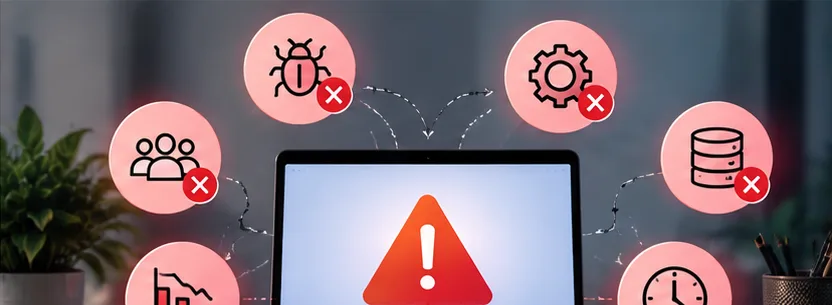
The goal of ongoing development is not to change the product constantly. It is to make thoughtful improvements that keep the product aligned with users, technology, and business needs.
Conclusion
A digital product should not be considered finished when it launches. Launch provides the opportunity to learn from real users, monitor real performance, and discover new requirements.
Ongoing product development creates the process needed to turn those insights into meaningful improvements. From UX refinement and performance optimization to security maintenance, technology updates, and new functionality, each development cycle can strengthen the product.
The most effective approach is continuous but focused. Teams should use data, user feedback, technical insights, and business priorities to determine what needs attention and what can wait.
By treating product development as an ongoing process, businesses can keep their digital products secure, reliable, useful, and ready to evolve as their users and goals change.
Frequently Asked Questions
- What is ongoing product development?
Ongoing product development is the continuous process of improving, maintaining, optimizing, and expanding a digital product after its initial launch. - Why does a digital product need development after launch?
Real users reveal new needs and problems after launch, while technology, security requirements, business goals, and performance conditions continue to change. - What should ongoing product development include?
It can include UX improvements, new features, performance optimization, bug fixes, security updates, technology maintenance, analytics, testing, and technical improvements. - How does user feedback help product development?
User feedback can reveal usability problems, missing functionality, confusing workflows, and opportunities that may not have been identified before launch. - How often should a digital product be updated?
There is no single schedule for every product. Updates should be based on product needs, security requirements, user feedback, performance data, technical changes, and business priorities. - Does ongoing development mean constantly adding new features?
No. Ongoing development also includes maintenance, optimization, security updates, UX improvements, bug fixes, and technical improvements. - How can businesses prioritize ongoing development work?
Prioritize work according to user impact, business value, urgency, technical risk, development effort, product data, and strategic goals. - Is ongoing product development important for SaaS products?
Yes. SaaS products continuously serve users through online infrastructure, making maintenance, security, performance, UX improvements, and new functionality important parts of the product lifecycle.

Insights | September, 2026
How to Improve Digital Product Performance Through Data and User Feedback
Explore how analytics, user feedback, and behavioral insights can reveal opportunities to improve usability, performance, engagement, and long-term product value.
Brandube

Insights | September, 2026
Designing Accessible Digital Products for Better User Experiences
Learn how thoughtful accessibility practices can make digital products easier to use, more inclusive, and more effective across different users, devices, and abilities.
Brandube

Insights | September, 2026
How to Plan a Successful Digital Product MVP Before Development
Discover how defining the right MVP scope, validating core ideas, and prioritizing essential features can help teams reduce complexity and build products with greater clarity.