Insights | September, 2026
Web Development Essentials for Fast, Scalable, and Reliable Websites
BrandubeExplore the core development principles that help businesses build fast, secure, scalable websites designed for reliable performance and long-term growth.

Table of Content
Overview Introduction Start with a Strong Development Foundation Build for Website Performance Create Responsive and Accessible Experiences Choose the Right Technology and Architecture Design for Scalability Build Secure and Reliable Websites Optimize Website Maintenance and Monitoring Common Web Development Mistakes to Avoid Conclusion Frequently Asked QuestionsOverview
A modern website needs to do more than look professional. It needs to load quickly, work reliably across devices, remain secure, support changing business requirements, and provide users with a smooth digital experience.
These requirements make web development an important part of the overall digital product experience. The quality of the underlying development architecture can influence performance, scalability, maintainability, security, and the ability to introduce new features over time.
Building a reliable website therefore requires more than selecting a framework and writing code. It involves making thoughtful decisions about architecture, performance, responsive behavior, accessibility, security, content, infrastructure, testing, and ongoing maintenance.
Introduction
Websites have evolved from simple collections of static pages into complex digital experiences that can support transactions, applications, customer journeys, content platforms, business workflows, and other critical functions.
As the role of a website grows, development decisions become increasingly important. A solution that works for a small website may not be appropriate when traffic, content, integrations, functionality, or user expectations increase.
Strong web development starts by understanding the purpose of the website and the requirements it needs to support. From there, developers can select appropriate technologies, create a suitable architecture, optimize the experience, and build a foundation that can evolve.
The objective is not simply to launch a website. It is to create a reliable digital platform that can continue to perform as the business and its users grow.
Start with a Strong Development Foundation
A reliable website begins with a clear understanding of its technical and business requirements. Before development starts, teams should define the purpose of the website, expected functionality, target users, content requirements, integrations, performance expectations, and future growth considerations.
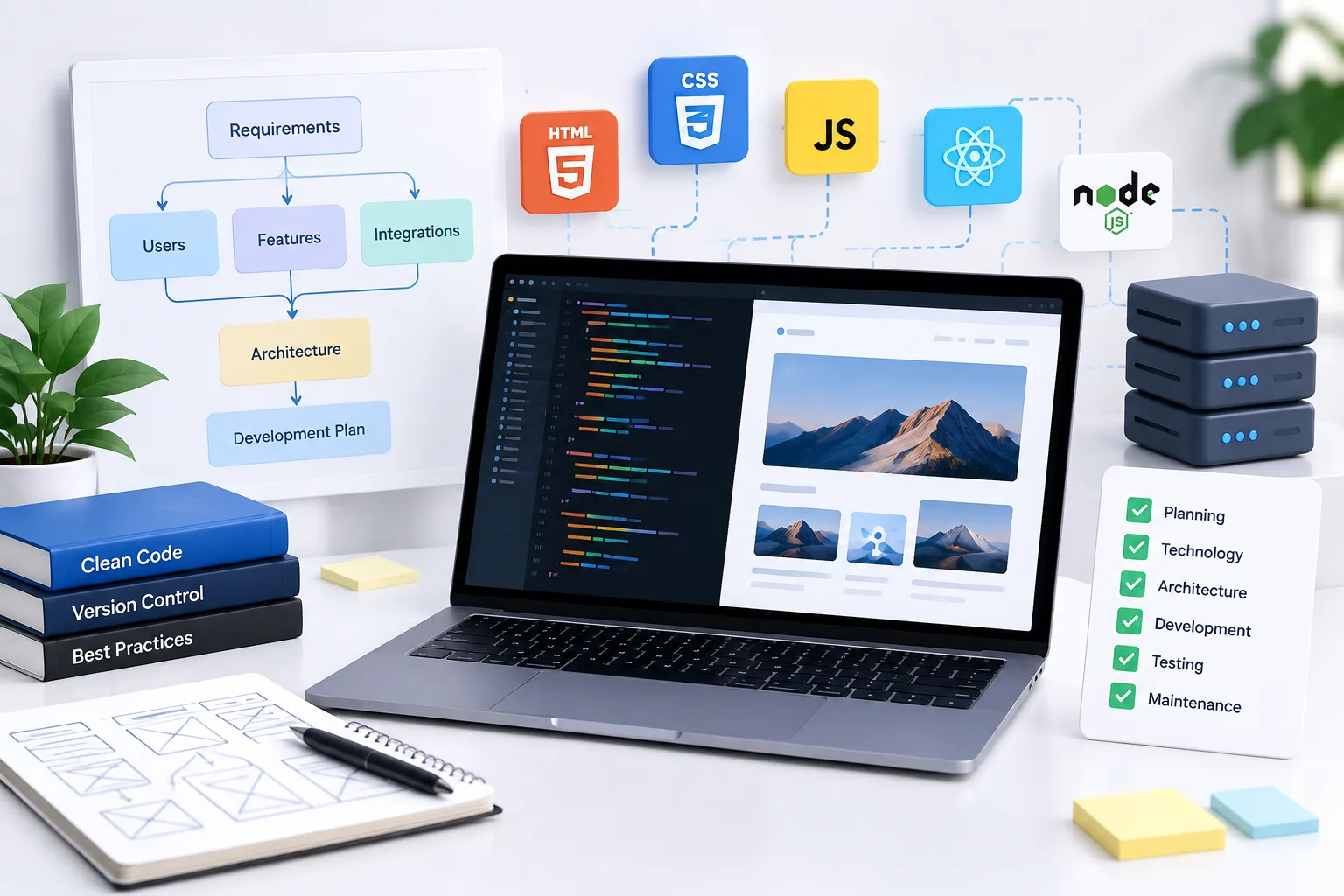
This planning stage helps prevent unnecessary technical complexity. Instead of selecting technologies simply because they are popular, development decisions can be connected to the actual requirements of the product.
A strong foundation also includes clean project organization, reusable code, clear naming conventions, version control, appropriate documentation, and development practices that make the project easier to maintain.
Good foundations may not always be visible to users, but they influence how easily a website can be improved, expanded, tested, and maintained after launch.
Build for Website Performance
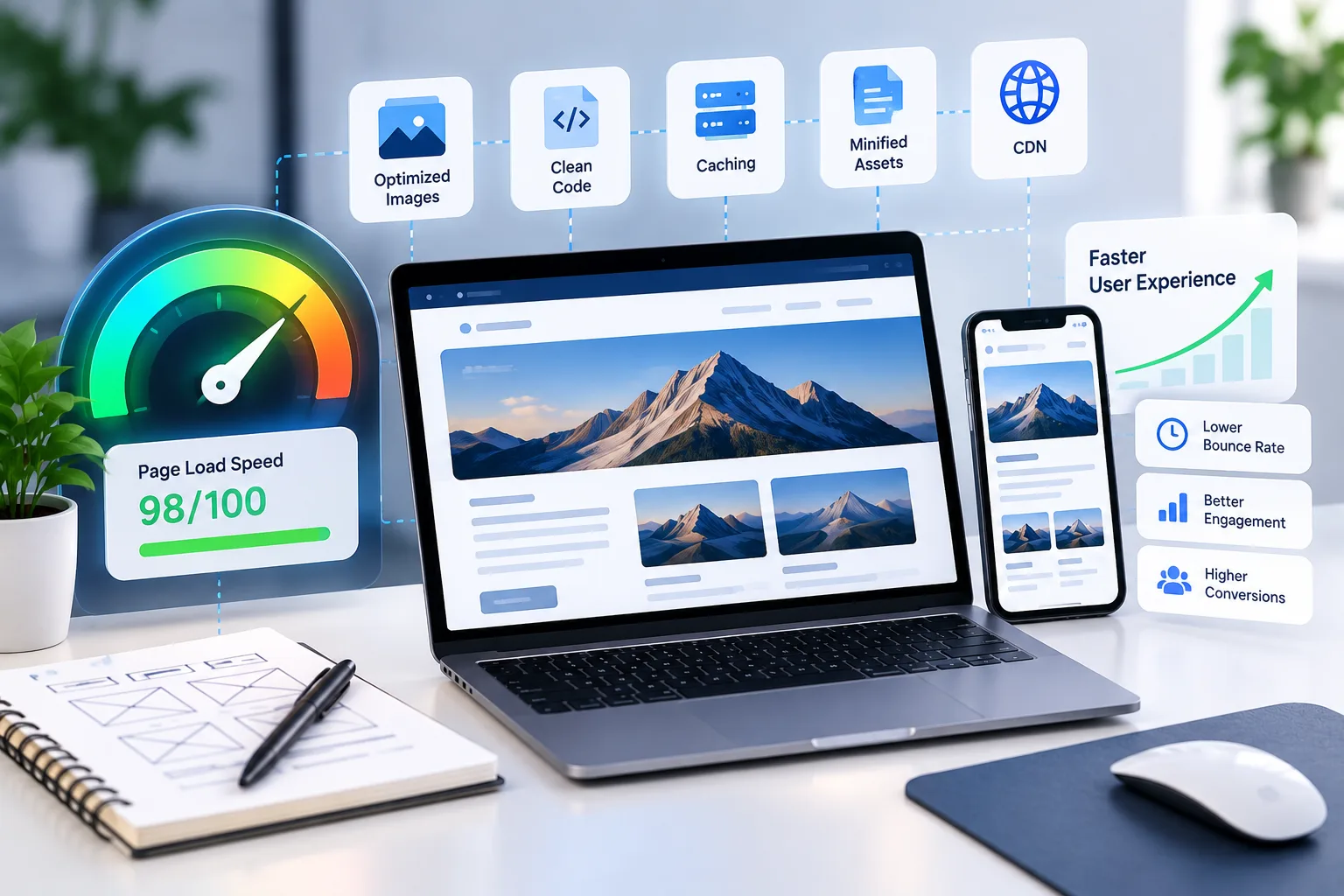
Website performance is an important part of the user experience. Slow pages can interrupt navigation, increase frustration, and make it harder for users to access important content or complete key actions.
Performance optimization should begin during development rather than being treated as a final step. Developers can consider image optimization, efficient code, asset loading, caching, server response times, third-party scripts, and other factors that influence how quickly a page becomes usable.
Modern websites may contain large images, animations, analytics tools, external services, and other resources. Each additional resource can affect the overall loading experience, so it is important to evaluate whether every dependency provides enough value to justify its impact.
Performance should also be tested across different devices and network conditions. A website that feels fast in a controlled development environment may behave differently for users with slower connections or less powerful devices.
Create Responsive and Accessible Experiences
Users access websites through a wide range of devices and environments. Responsive development ensures that layouts, content, navigation, and interactive elements adapt to different screen sizes rather than depending on a single desktop configuration.
A responsive website should consider more than screen width. Touch interactions, readable typography, flexible layouts, image behavior, navigation patterns, and content hierarchy all influence the quality of the experience on different devices.
Accessibility should also be considered throughout development. Semantic HTML, meaningful labels, keyboard navigation, appropriate contrast, accessible forms, logical heading structures, and useful alternative text can help make websites more usable for a wider range of people.
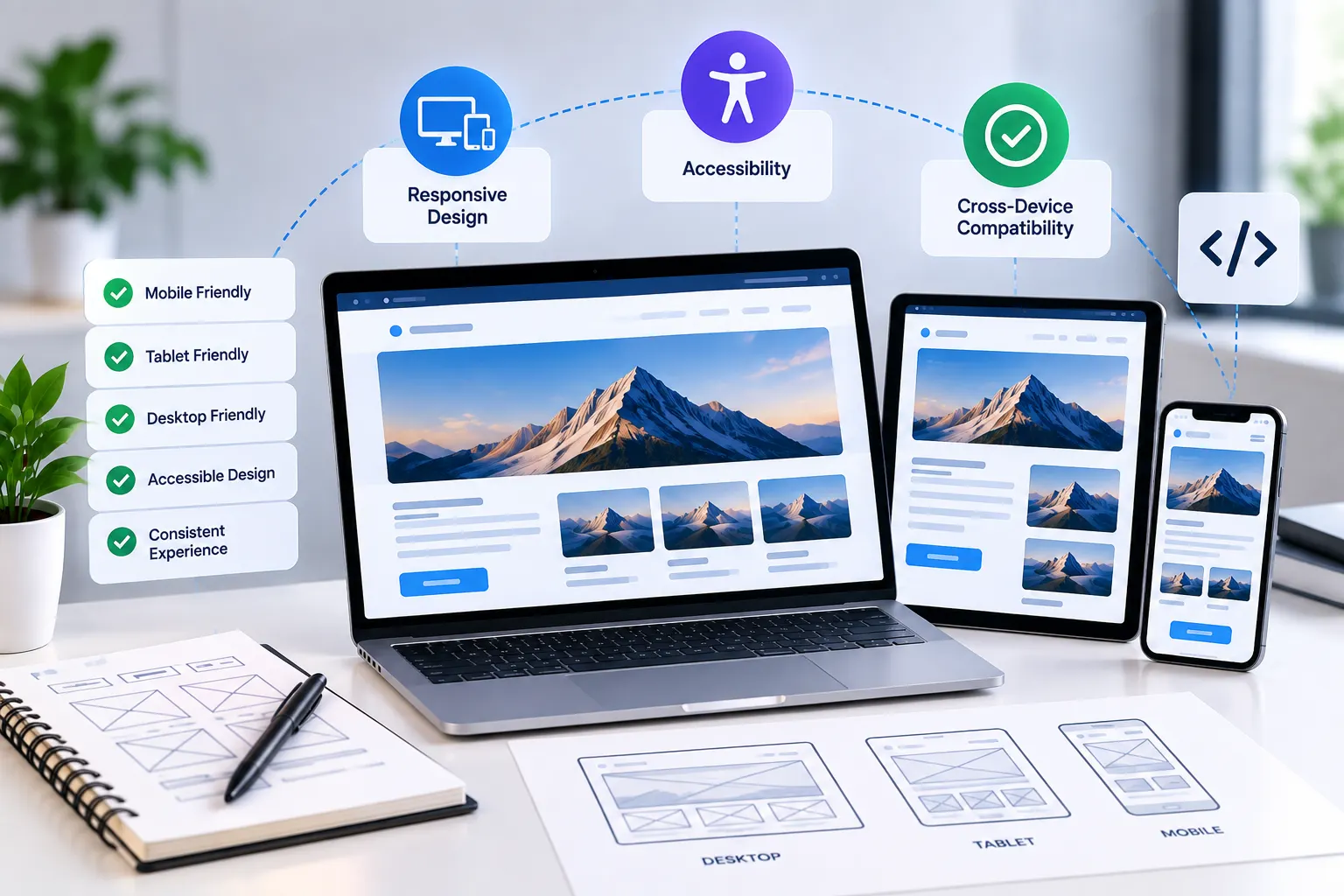
Building responsiveness and accessibility into the development process is generally more effective than trying to add them after the website has already been completed.
Choose the Right Technology and Architecture
The technology stack should be selected according to the requirements of the website rather than based solely on trends. Different projects may require different approaches depending on their functionality, performance requirements, integrations, content management needs, and expected scale.
Architecture also influences how easily a website can evolve. A well-structured application separates responsibilities appropriately and makes it easier to maintain individual parts of the system without introducing unnecessary changes elsewhere.
Developers should consider both current and future requirements when making architectural decisions. Overengineering a small website can create unnecessary complexity, while an architecture that cannot accommodate future requirements may become difficult to extend.
The right approach is usually one that provides enough structure for the product's current needs while leaving a practical path for future growth.
Design for Scalability
Scalability means preparing a website to handle growth without requiring the entire system to be redesigned. Growth can come from increasing traffic, more content, additional features, new integrations, or expanding business requirements.
A scalable architecture should make it possible to improve individual areas without creating unnecessary dependencies throughout the application. Reusable components, modular code, efficient data handling, and appropriate infrastructure can all contribute to this flexibility.
Scalability should also be considered at the user experience level. As a website grows, navigation, content structures, search, filtering, account areas, and other features may need to evolve to help users manage increasing amounts of information.
Planning for scalability does not mean building every possible feature from the beginning. It means creating a foundation that can evolve as actual requirements become clearer.
Build Secure and Reliable Websites
Security and reliability are fundamental parts of professional web development. Websites can handle user information, business data, authentication, payments, forms, integrations, and other functions that require appropriate protection.
Development teams should follow secure coding practices, protect sensitive information, validate inputs, manage authentication appropriately, keep dependencies updated, and apply suitable access controls.
Reliability also depends on how the website responds when something goes wrong. Error handling, validation, fallback states, monitoring, backups, and recovery processes can help reduce the impact of unexpected issues.
Security and reliability should not be treated as features added after development. They should be considered throughout architecture, implementation, testing, deployment, and ongoing maintenance.
Optimize Website Maintenance and Monitoring
Launching a website is not the end of development. Websites depend on software, infrastructure, integrations, content, and technologies that continue to change after launch.
Ongoing maintenance can include security updates, bug fixes, performance improvements, dependency updates, content-related technical changes, compatibility improvements, and new functionality.
Monitoring can also help teams identify issues before they become larger problems. Performance metrics, uptime monitoring, error tracking, security alerts, and user feedback can provide valuable signals about the health of a website.
A continuous development approach helps businesses keep their digital platforms reliable and aligned with changing requirements instead of allowing technical issues to accumulate over time.
Common Web Development Mistakes to Avoid
Building a professional website requires careful attention to both technical implementation and the overall user experience. Several common mistakes can create problems later in the product lifecycle.
- Choosing technology without considering requirements: Popular technologies are not automatically the right choice for every project. Technology decisions should support the actual product needs.
- Ignoring performance until launch: Performance should be considered throughout development rather than treated as a final optimization task.
- Building without scalability in mind: A website may work well initially but become difficult to maintain when traffic, content, or functionality increases.
- Neglecting accessibility: Accessibility should be part of the development process instead of being treated as an optional improvement.
- Using too many third-party dependencies: External tools can add useful functionality, but unnecessary dependencies can increase complexity and affect performance or reliability.
- Skipping testing: Testing across browsers, devices, screen sizes, interactions, and common user scenarios can help identify problems before users encounter them.
- Ignoring ongoing maintenance: Websites need continued updates and monitoring to remain secure, reliable, and compatible with changing technologies.
Conclusion
Fast, scalable, and reliable websites are built through a combination of thoughtful architecture, efficient development, responsive design, accessibility, security, performance optimization, and continuous maintenance.
The strongest development process begins with a clear understanding of requirements and continues through planning, implementation, testing, deployment, and ongoing improvement.
Rather than focusing only on getting a website launched, businesses can benefit from treating their website as an evolving digital platform. This approach creates a stronger foundation for future features, changing user expectations, increasing traffic, and long-term business growth.
When development decisions are made with both current needs and future requirements in mind, a website can remain fast, dependable, maintainable, and ready to evolve.
Frequently Asked Questions
- What makes a website fast and reliable?
A fast and reliable website combines efficient development, optimized assets, appropriate infrastructure, responsive implementation, effective caching, reliable architecture, and ongoing performance monitoring. - Why is scalability important in web development?
Scalability helps a website accommodate increasing traffic, content, functionality, and business requirements without requiring unnecessary architectural changes. - How does web development affect website performance?
Development decisions influence how efficiently pages load, how resources are delivered, how data is handled, and how quickly users can interact with the website. - What technology should be used to build a website?
The appropriate technology depends on the website's requirements, functionality, expected scale, integrations, performance needs, maintenance considerations, and future direction. - Why is responsive web development important?
Responsive development allows websites to adapt their layouts, content, navigation, and interactions to different screen sizes and devices. - How important is website security?
Security is essential for websites that handle user information, authentication, payments, business data, or third-party integrations. It should be considered throughout development and ongoing maintenance. - Does a website need ongoing maintenance after launch?
Yes. Updates, security improvements, bug fixes, performance optimization, compatibility changes, and new requirements can make ongoing development important for maintaining a reliable website. - How can website performance be improved after launch?
Teams can analyze performance data, identify bottlenecks, optimize assets and code, review third-party resources, improve infrastructure, and continuously test the experience across devices and network conditions.

Insights | September, 2026
What Makes a Successful Mobile App: UX, Performance, and Functionality
Explore the essential factors behind successful mobile apps, from intuitive UX and responsive performance to useful functionality and consistent experiences.
Brandube

Insights | September, 2026
A Practical Guide to Building High-Performance Web Applications
Discover the key considerations for developing web applications that deliver reliable performance, scalable architecture, intuitive experiences, and long-term value.
Brandube

Insights | September, 2026
Custom Software Development: When Off-the-Shelf Solutions Aren’t Enough
Understand when custom software makes sense and how tailored digital solutions can address complex business requirements, workflows, and long-term growth.